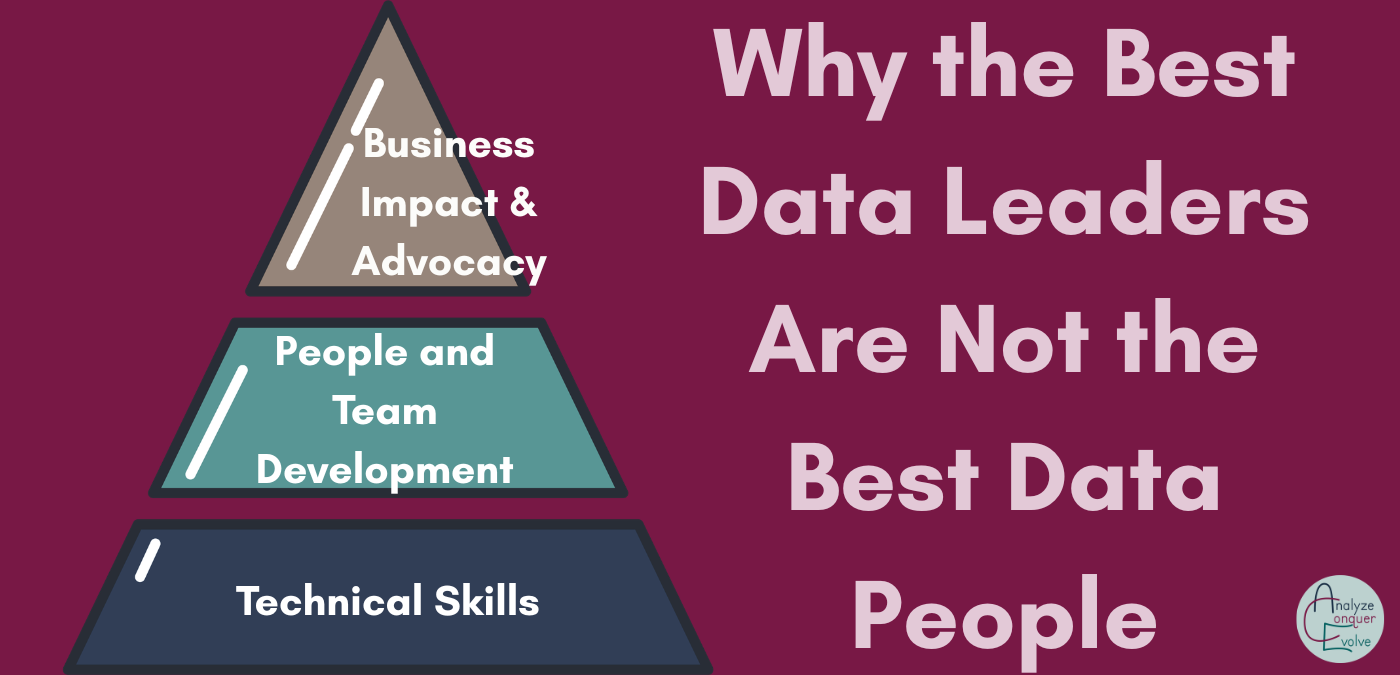
There is a defining moment that happens to almost every strong individual contributor who moves into leadership.
It usually arrives within the first few months. The team is working through an architectural snag, and you see the resolution before anyone else does. You know exactly what SQL query to write, what transformation model to deploy, and what the data anomalies mean. Instead of coaching your team through the logic, you take keyboard control and solve it yourself.
It feels productive. It feels helpful. And it is one of the most common ways new data leaders inadvertently stunt their team's growth.
I have lived this firsthand. I spent years being the practitioner who could out-SQL most of the room, build ingestion pipelines faster than anyone on the team, and take pride in being the person called when systems failed. That technical reputation was hard-earned. When I stepped into management, it took me longer than I care to admit to recognize that leaning on that technical crutch was holding me back.
The most impactful data leaders I have worked alongside were not always the strongest technical specialists on their teams. In some cases, they were not even close. What they possessed instead was a capability far harder to teach: the discipline to assemble teams that exceeded their individual capabilities, coupled with the executive acumen to create the conditions for those teams to succeed.
The Trap of Technical Identity
Most professionals who lead data and engineering groups earned the seat because they were exceptional individual contributors. Technical depth builds early credibility with engineers; credibility in this space requires understanding the reality of the work.
The problem is that the capabilities that earned you the promotion are fundamentally distinct from the capabilities required to excel in management.
As an individual contributor, being the sharpest technical mind in the room is a competitive advantage. You execute faster, ship cleaner code, and build a reputation that accelerates advancement. Optimizing for personal technical excellence serves you well on the IC track.
In leadership, however, that same instinct can become a liability:
- Creating Dependency: When you provide every answer, your team stops interrogating problems independently.
- Stunting Growth: Solving problems for engineers instead of coaching them through the architecture breeds operational bottlenecks.
- Defending Ego: When your professional identity depends on being the technical authority, you will subconsciously resist hiring or empowering specialists who challenge that status.
What Exceptional Data Leaders Actually Do
Transitioning away from the tools does not mean becoming technically illiterate. Strong data leaders stay grounded. They maintain enough architectural fluency to evaluate trade-offs, ask probing questions, and partner credibly with both engineers and executive stakeholders.
The real shift is how leaders direct their energy:
1. Developing People Over Shipping Tickets
The highest-leverage investment a leader makes is developing their team. This means designing stretch assignments, providing direct feedback, coaching through system bottlenecks, and accepting the temporary operational cost of slower short-term delivery to foster long-term autonomy. The compounding return of a self-sufficient engineering team dwarfs any individual code commit a manager could produce.
2. Establishing Strategic Clarity Over Sheer Velocity
Individual contributors focus on executing work correctly. Leaders focus on verifying that the team tackles the right problems. This requires commercial acumen: identifying core business drivers, translating vague stakeholder requests into crisp technical requirements, and deprioritizing requests that do not move organizational needles. Flawless execution on the wrong priority remains a failure.
3. Removing Operational Friction
Great leaders serve as organizational shock absorbers. They shield engineers from political churn, manage cross-functional expectations, run disciplined intake workflows, and defend uninterrupted focus time. When a leader excels at friction removal, things run smoothly without drawing attention to the effort required to keep it that way.
4. Translating Between Commercial and Technical Worlds
Data teams and executive stakeholders speak different dialects. The schema details vital to an analytics engineer mean little to a Chief Revenue Officer. Strong leaders act as translators: discussing margins and customer retention with executive peers, then contextualizing those commercial targets into technical initiatives for the engineering team.
5. Advocating for Invisible Foundational Work
Data initiatives rarely fail due to lack of talent; they fail due to neglected foundations. Essential work like data governance, pipeline reliability, documentation, and technical debt reduction rarely comes with immediate executive applause. Strong leaders partner with their teams to identify system risks, translate those risks into business cases, and secure the operational runway needed to maintain scalable infrastructure.
Letting Go of the Tools
Relinquishing hands-on technical work is difficult. For high performers, technical proficiency is not just a workplace skill; it is a core identity that earned them respect and promotions.
Stepping away can feel like a setback, particularly during early leadership transitions when management instincts are raw while technical instincts remain sharp. It is completely natural to miss the immediate satisfaction of writing code and shipping a completed project.
The necessary mental pivot is simple: the goal is no longer to be the best technical mind on the team. The goal is to build an environment where exceptional technical minds can do the best work of their careers.
Leadership Habits That Make the Shift Real
To move past the individual contributor mindset in your daily leadership routine:
- Ask guiding questions rather than handing down answers: When an engineer brings an issue, resist solving it. Ask: What approaches did you consider? What do the pipeline logs indicate? What trade-offs exist between those paths? It takes longer initially, but it cultivates engineers who solve problems before they reach your desk.
- Measure team impact, not personal activity: Stop tracking the queries you wrote or the dashboards you published. Evaluate what your team shipped, what operational decisions were enabled, and whether your direct reports expanded their technical maturity over the quarter.
- Actively hire for your blind spots: Confident leaders actively recruit specialists who surpass them in data engineering, predictive modeling, or distributed architecture. Assembling a group of practitioners who are each sharper than you in their respective discipline is the definition of good management.
- Build the team's internal brand across the business: Most executives only see the final dashboard; they do not see the rebuilt ingestion pipelines or the silent governance checks that prevent board-level reporting errors. Translate that effort into business outcomes: frame work around reduced error rates, automated compliance, and accelerated decision cycles to build lasting stakeholder trust.
The Compounding Advantage of Leadership
Technical excellence opens the door to leadership, but it is not what keeps you successful there. The leaders who build sustainable, high-output data organizations understand that their job is to make everyone around them more capable.
It is a demanding transition that takes patience and deliberate study. Leaders who commit to mastering that shift, however, build organizations and careers that compound far beyond the limits of individual code.